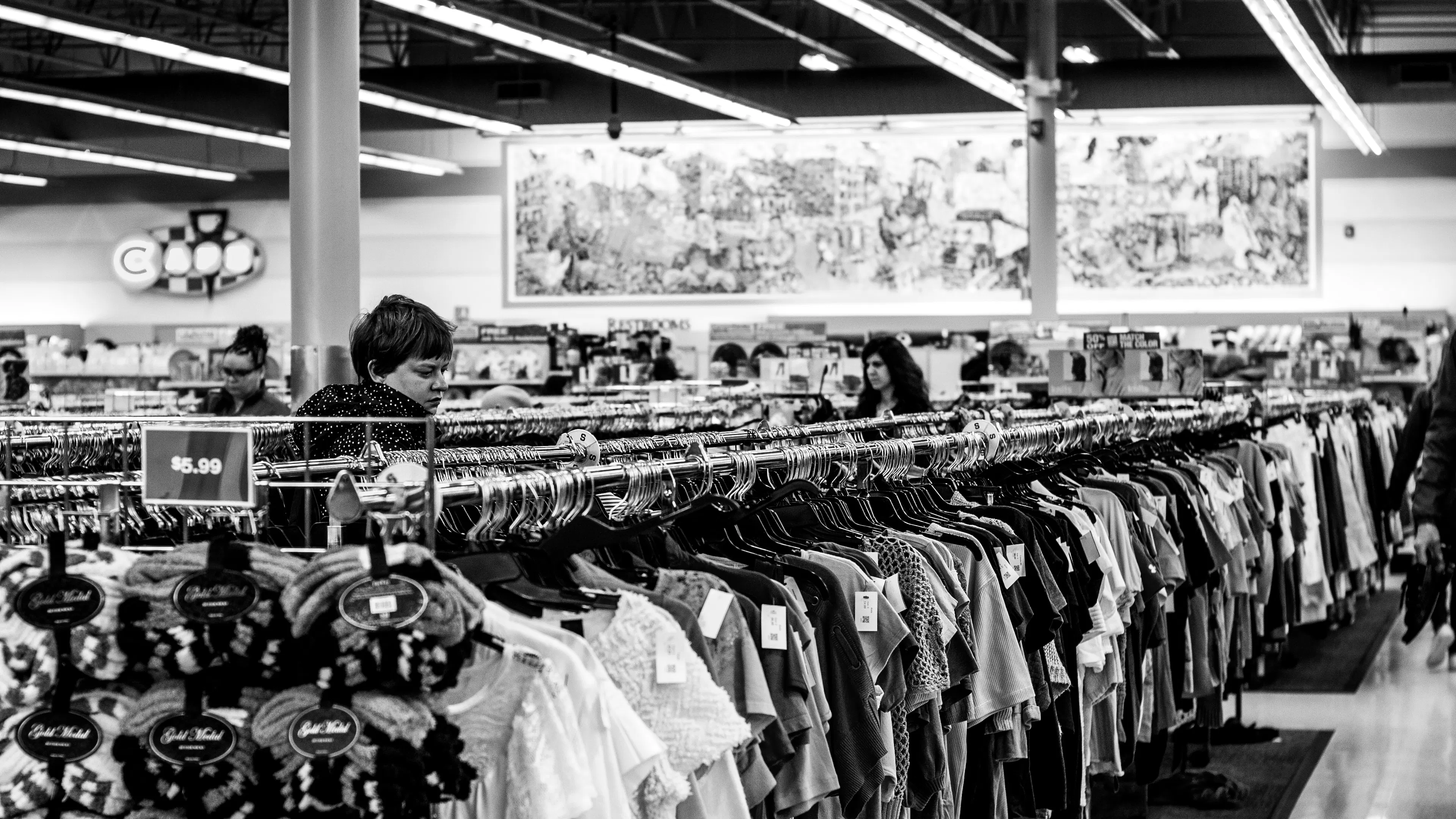
If there’s one thing that we as humans have gotten better at over the last few decades, it’s donating our old clothes instead of throwing them away. Thrift stores are in style now, and we thrive on finding a killer deal at a consignment store or a unique piece at a yard sale. Our wardrobes are slowly getting more and more sustainable.
We’ve already written about why sustainable fashion and donation is so important, but there’s so much more to donating our clothes than just tossing them in a box and dropping them off at a center.
Donating clothes is a sustainable alternative to throwing them away, but what happens to the clothes that aren’t appealing enough to re-sell at a thrift store? When donated clothes don’t make the cut for resale, their journey becomes a far less sustainable one.
What happens to clothes that don’t sell at thrift stores?
Let’s use Goodwill as an example. Most Goodwill regions follow a long process that aims to keep items out of landfills as long as possible. If an item has stayed on the shelf for over four weeks, then it’s sent to a Goodwill Outlet where donations are sold by the pound. If it doesn’t sell there, then it’s carted to an auction where buyers bid on boxes filled with leftover donations.
Items that don’t sell at auction are sent to an independent textile recycler who either redistributes it to second-hand clothing stores, cut the clothes into rags or send the clothes to developing countries. Finally, any items that these textile recyclers deem unworthy of resale are sent to the landfill. Most large thrift store chains follow a similar process, and the clothes that don’t sell usually end up at the same independent recycling centers.
After all that work, nearly 11 percent of all donations still end up in a landfill. Exporting cheap, used clothes to developing countries is a practice that is extremely harmful to local economies and textile industries, and the U.S. exports millions of pounds of clothes each year. Even then, nearly 40% of those donated clothes end up in landfills in other countries.
InstagramWhat does that mean for our used clothes?
This presents a conundrum for those of us who are just wanting to clean out our closets and live a more ethical lifestyle. We can’t control where our clothes go after we drop them off at a donation center, but we also don’t want to throw our clothes away! What’s the solution here, folks?
In the end, the bulk of the economic and environmental impacts created by the fashion industry are on the shoulders of, well, the fashion industry itself. Fast fashion and seasonal trends do nothing to help stem the overwhelming tide of textiles entering the markets, and there is often nowhere for all these clothes to go except to landfills in other countries. After the oil industry, the fashion industry is the world’s second-largest polluter.
But, don’t lose hope! There are a few things we can do to avoid aiding in landfill pollution and foreign economic collapse.
Reuse your old clothes
One of the best things you can do to avoid your donations ending up in landfills is to find another use for them.
T-shirts, for example, are some of the hardest things to resell at donation centers because they are usually quite context-specific. There’s not a high likelihood of someone buying your old family reunion T-shirt, so those usually end up cycling through the donation stores over and over until they finally end up in a landfill.
Even denim jeans are more likely to be thrown away. Jeans with torn knees may be in style here in the U.S., but in developing countries they’re seen as old and tattered. When no one buys those, those get thrown away, too.
Instead of donating those hard-to-sell clothes, consider reusing and repurposing them into something else!
T-shirts
Old T-shirts are incredibly versatile and can be turned into a wide variety of handy household items.
- Cut them into reusable rags for cleaning purposes (think tissues, paper towels, disinfecting wipes, etc.).
- Turn them into washable makeup removing rounds.
- Soak them with beeswax to create reusable food wraps.
- Sew them into pillowcases or fancy cushion covers (don’t forget cozy sweater cushions!)
- Create some stretchy and stylish headbands.
- Create a T-shirt quilt using all your sentimental tees!
- Make stylish tote bags or grocery bags you can use over and over again!
Denim
- Jeans make great draft stoppers and can help you save on your energy bill!
- Denim fabric purses may be SO 2000s, but they also help save the planet.
- Jeans and flannels make for great quilts that are sure to last many winters to come.
- Turn pieces of denim into pieces of art, like this sunburst textile art.
- Durable denims make for great rugs!
- If you’ve got a knack for sewing, try making these stylish and long-lasting stuffed toys!
Check out Levi Strauss & Co.’s list of ways to repurpose your jeans for more fun ideas!
A simple Google search will result in about a billion ways to reuse and repurpose your old clothes, anything from ties to underwear to workout leggings to bras. Just make sure that you’re making use out of as much as possible and not just throwing away the scraps whenever you’re doing a project!
InstagramDonate ethically
If you do end up donating your clothes, keep a few things in mind.
- Check to see what your local donation center does and doesn’t accept.
- Don’t donate clothes that are too damaged to be resold. Those will just go into a landfill, so try to donate clothes that have a higher likelihood of being sold and given a new life.
- Do you have any friends who would want it? If you have a coworker who’s complimented your tie or a pal who would love your dress, ask them if they’d like it! That way, you avoid the donation center cycle altogether!
- Donate to local centers rather than chain stores. Donation centers make money off of your donations at some point or another, so you have the power to choose where you want that money to be spent. Organizations like Goodwill or The Salvation Army have programs that support local jobs and training programs, but don’t stop there! Find out how the local consignment store uses its funds to support a mission you believe in. If you’re going to donate, donate to a mission you believe in.
Don’t buy new clothes
The biggest problem in the fashion industry is the fashion industry, so don’t support them! If you are going to buy clothes, buy from local and ethical companies that do more to help fix the problem than just contributing to it.
We all have our part to play in protecting our planet, even if it’s just by keeping our clothes out of the landfills in these unique ways. These small things add up, so there’s no act too small to make a real difference!
Good luck!
Pin it!
Featured photo courtesy Unsplash/Sean Benesh