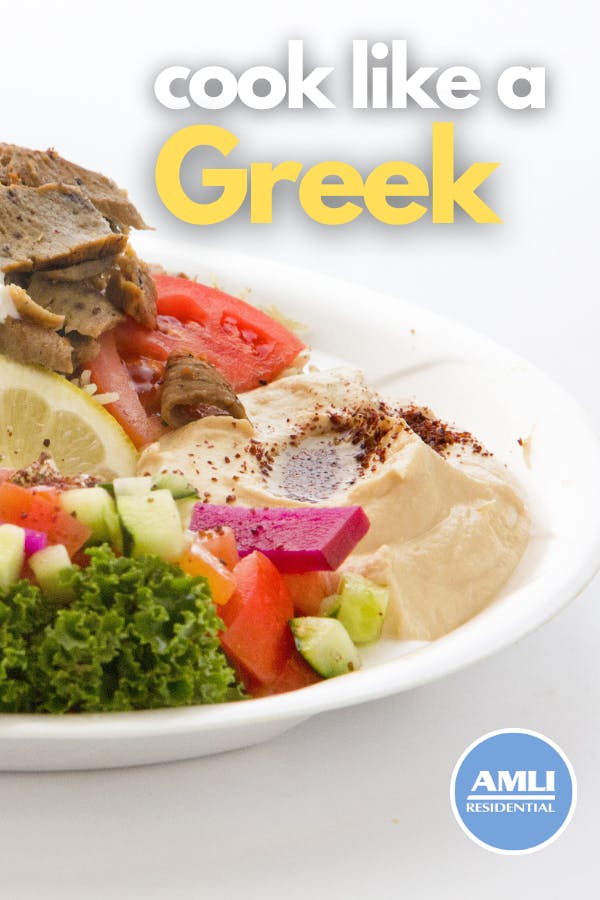
Greek cuisine is, ultimately, centered around the country’s geography.
Greece is made up of a large mainland and thousands of islands ranging from the impressive Crete to tiny, rocky mounds of lands sprinkled throughout the Aegean Sea. Its southern latitude and location on the Mediterranean gives Greece a warm, dry climate that’s ideal for farming and, of course winemaking — plus, direct access to both the warm Mediterranean Sea to the south and west and the relatively cooler Aegean Sea to the east have given Grecian fisherman a host of watery bounties to choose from.
Mountains, beaches, coastlines and ample farmland in-between makes for a truly ideal location for growing… well, anything! Fresh fruits, vegetables, dairy and fish are staples in Greek cooking since they are readily available at all times, and with thousands of years’ worth of civilization in the area, the people of Greece have had plenty of time to perfect their meals.
Historically, Greek cooking has orbited the “Mediterranean triad” of olive oil, wheat and wine. You’ll find at least one of these ingredients in almost every meal and it will most likely include olive oil, as the trees that produce the fruit grow all over the country in expansive groves.
Of course, with such a diverse country spanning such a large area, no one cuisine could define all of Greece, with regional cuisines such as those from the Ionian Islands, Crete, Macedonia and Santorini all featuring different ingredients and local favorites.
There’s no way we could adequately cover Greek cuisine in all its regional forms in just one article, so we’ll pair it all down to a list of foods that are common all over the country, and popular outside of Greece as well. Who knows? Maybe a couple of these will become a new staple in your dinner menu!
Tzatziki is a perfect addition to vegetables, fish, breads and meats — hot or cold.
This simple condiment is made with Greek yogurt, dill, mint, cucumber, garlic, salt and lemon juice and adds an amazing tang of freshness and coolness to any dish.
Moussaka is the epitome of Greek comfort food — at least, that’s what we certainly like to think.
If lasagna is the poster child of Italian casserole food, then moussaka does the same for Greek cuisine. Layers of sliced eggplant and ground meat (lamb, usually) sauce are topped with a thick layer of creamy béchamel sauce and baked to perfection. Don’t forget to sprinkle some fresh cheese on top!
Often referred to as "Greek lasagna," this cozy, savory dish is made with layers of pasta, ground meat (usually beef), béchamel sauce and cheese. It’s similar in structure to moussaka though it replaces the eggplant with pasta.
These savory meat dishes are similar, consisting of marinated meat (usually pork, chicken or lamb) cooked on a skewer and served in a pita bread with various toppings like onions, tomatoes and tzatziki. Gyros are typically made from thinly sliced meat cooked on a vertical rotisserie, while souvlaki is cooked in chunks on a skewer.
This popular dish is a savory phyllo pastry pie filled with a mixture of spinach, feta cheese, onions and dill. It's a popular appetizer, snack or main course and is often sold by-the-slice in bakeries and delis.
The term psari refers to fish of all kinds, and fresco psari refers to “fresh fish” specifically. So, when you’re at a Greek restaurant or taverna, make sure to ask for their daily special on fresh fish — you’re sure to love it!
Okay, when you think of anchovies, you’re probably thinking of the little ones in the tin that’s been sitting on your pantry shelf for several years — unused and unwanted.
But anchovies in Greece are so different.
When you order anchovies from a Greek restaurant, though, you’re not getting canned fish — you’ll get small, fatty white fish cured in salt and marinated in olive oil and herbs before being served with olives and fresh lemon.
Octopodaki, as it's often called on Greek menus, is made by grilling octopus tentacles and serving it with fresh lemon wedges. As most Greek seafood should be, it’s so fresh that you shouldn’t need anything else to flavor this ocean-fresh dish!
Dolmades, dolmas, dolmadakia… whatever you name it, these tasty bite-size treats are popular as snacks, appetizers and light meals all over Greece. Made with a mixture of rice, ground meats, pine nuts, chickpeas, dill or yogurt (depending on the region) rolled into grape leaves, dolmades are essential to both Greek and Turkish cooking, among others.
This slow-cooked stew features red meat cooked with onions, tomatoes, red wine and cinnamon, creating a warm and cozy dish that highlights game meat like venison and rabbit.
This simple salad is now popular all over the world and appreciated for its simplicity and freshness. At its heart, it consists of sliced cucumbers, tomatoes, red onion and olives served with feta cheese, a sprinkle of salt and a drizzle of olive oil.
These sweet balls of fried dough are similar to donut holes in texture, though they’re typically topped with nuts or cinnamon and absolutely smothered in honey. Yum!
You can’t have Greek food without ending your meal with a piece of fresh baklava. It simply cannot be done.
Baklava is made with ultra-thin layers of phyllo pastry smothered with honey and stuffed with pistachios, dates or any type of chopped nuts. These are painstakingly-tricky to make by hand and, despite the advances of modern cookery and store-bought phyllo pastry, they’re still not the easiest to make! It just makes you appreciate the treat even more!
Liquors and alcoholic beverages vary across Greece, especially with the amount of wine grown in the region. Ouzo, though, is a favorite everywhere.
This clear, anise-flavored liquor is around 80-proof and, when served with water or ice, turns milky white. Sip it slowly as you enjoy your meal and you’ll fit right in!
If you’re in Greece, chances are you’ll see locals enjoying their coffee at a taverna before you even find your first bite to eat! On hot days you can enjoy an ice-cold frappe coffee made from instant coffee, sugar and milk, or you can sip on a traditional Greek coffee similar to Turkish coffee made in a long-handled pot over a hot stove.
Cooking recipes from all over the world is easy, thanks to all the great information and resources on the world wide web. Be sure to check out our other international cuisine guides for Turkish, Moroccan, South African, Jamaican, Belgian, Sicilian, Nepaliand Scottish cooking!